
Why Contractors Are Switching To An AI Estimating Platform

Dhyna PhilsHead of Marketing
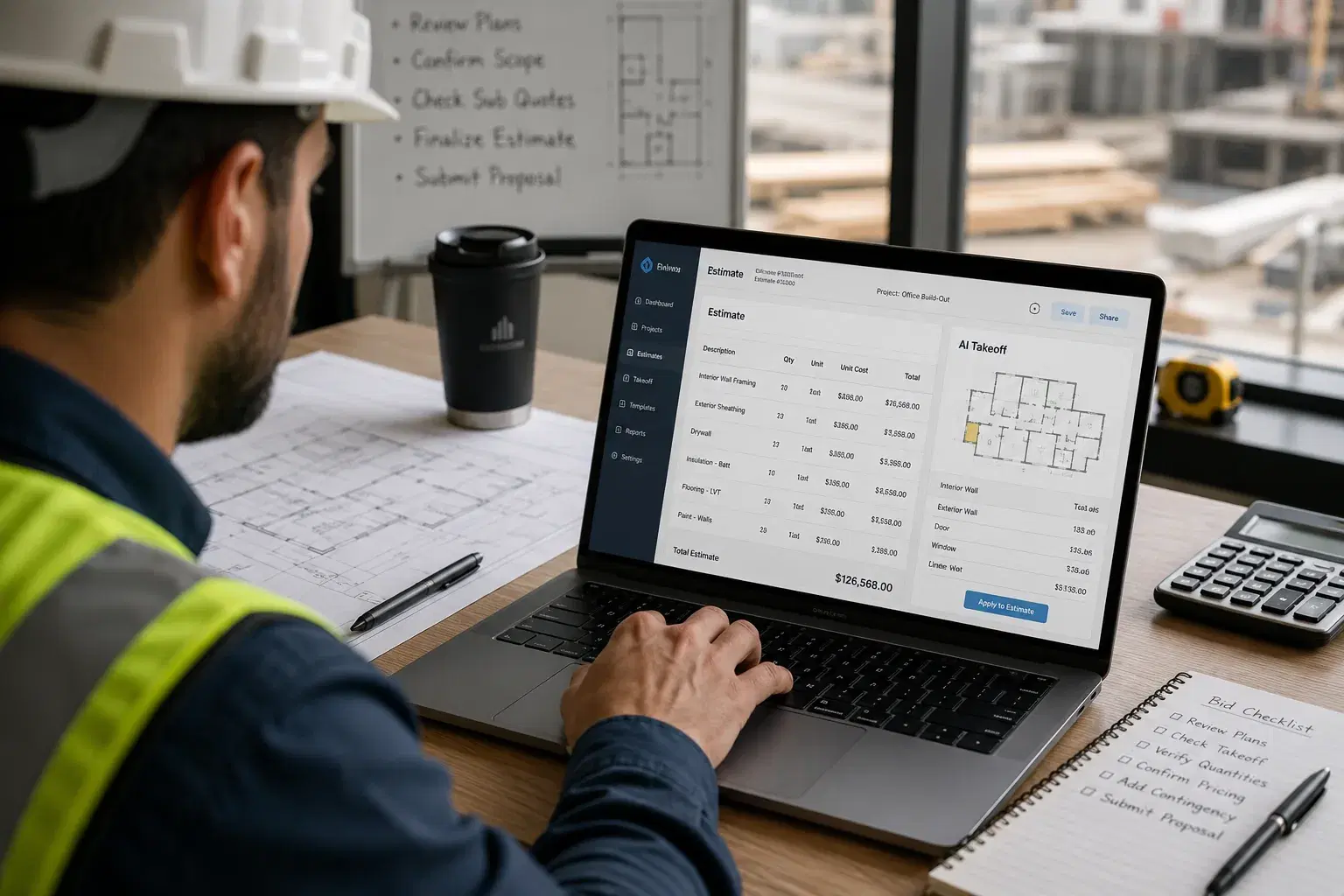
Estimating has always carried a heavy load for contractors. Every bid has to balance speed, accuracy, scope, labor, materials, subcontractor input, customer expectations, and the uncomfortable reality that a single missed detail can hurt the job before it even starts. For years, contractors handled that pressure with spreadsheets, manual takeoffs, old templates, and the experience of whoever knew the work best. That experience still matters, but the process around it is changing fast.
Contractors are switching to an AI estimating platform because the old way is getting harder to defend. Bid deadlines are tighter, material pricing moves faster, customers expect more clarity, and teams do not have time to rebuild every estimate from scratch. AI does not replace contractor judgment. It helps estimators move faster, organize scope more clearly, and reduce repetitive work that slows the bidding process.
The Pressure On Estimators Has Changed
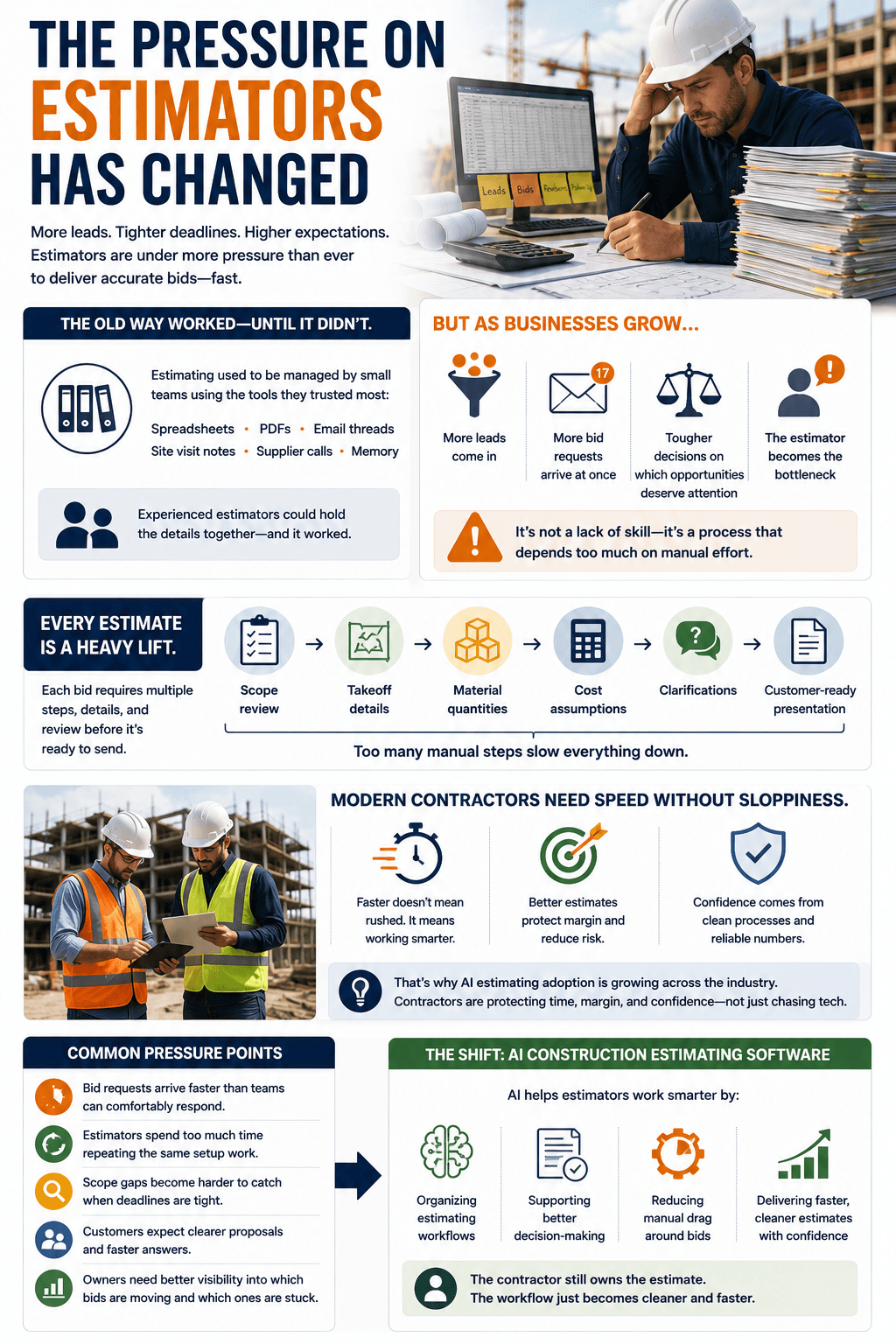
Estimating used to be treated as a back-office function. Contractors knew it was important, but the process was often managed by a small group of people using whatever tools they trusted most. That usually meant spreadsheets, PDFs, email threads, notes from site visits, supplier calls, and a lot of memory. It worked because experienced estimators could hold the details together.
That model starts to crack as the business grows. More leads come in, more bid requests arrive at once, and the team has to decide which opportunities deserve attention. The estimator becomes the bottleneck, not because they lack skill, but because the process depends too much on manual effort. Every estimate needs scope review, takeoff details, material quantities, cost assumptions, clarifications, and a customer-ready presentation.
Modern contractors need speed without sloppiness. They need a way to produce better estimates without turning the whole process into a rush job. That is a big reason AI estimating adoption is picking up across the industry. Contractors are not chasing technology for its own sake. They are trying to protect time, margin, and confidence.
- Bid requests arrive faster than teams can comfortably respond.
- Estimators spend too much time on repetitive setup work.
- Scope gaps become harder to catch when deadlines are tight.
- Customers expect clearer proposals and faster answers.
- Owners need better visibility into which bids are moving and which ones are stuck.
AI helps organize estimating workflows, support decision-making, and reduce the manual drag around bid creation. The contractor still owns the estimate, but the workflow becomes cleaner and faster.
AI Is Changing The Workflow, Not The Contractor's Judgment
One of the biggest misconceptions about AI estimating is that it removes the contractor from the process. That is not what serious contractors want, and it is not how the technology should be used. Estimating still depends on field knowledge, trade experience, regional pricing awareness, subcontractor relationships, risk judgment, and understanding the customer's real expectations. AI works best when it supports that judgment instead of pretending to replace it.
The better way to think about AI is workflow improvement. It can help extract project details, organize estimate inputs, structure scope, flag missing information, and speed up repetitive tasks. That gives estimators more room to focus on the parts of the estimate that require real expertise. Instead of spending hours copying, sorting, and reformatting details, they can review assumptions, sharpen scope language, and decide whether the opportunity makes sense.
There is a real difference between faster estimating and careless estimating. Contractors do not need a tool that spits out numbers with no context. They need a system that helps them navigate the estimating process with greater control. That means keeping the human estimator involved while making the supporting workflow less painful.
When comparing AI construction estimating with traditional methods, it is clear that AI changes the estimating process. But it does not erase the need for contractor review. The strongest results come from combining automation with professional judgment.
Faster Bids Can Create A Real Competitive Edge
Speed matters in construction bidding. Contractors often compete against companies responding to the same project, customer, or tight timeline. If a team takes too long to respond, the opportunity can cool off before the estimate ever reaches the customer. Faster estimating does not guarantee the job, but it does help contractors stay in the conversation.
A faster bid process also helps teams qualify work more intelligently. Not every lead deserves a full estimate. Some jobs are a poor fit, too risky, too small, too vague, or outside the company's current capacity. If the estimating process takes too much effort, teams may either overcommit to bad opportunities or ignore good ones because they do not have time to evaluate them properly.
AI helps contractors move from raw project information to a more organized estimate faster. That can improve response times, reduce administrative work, and help teams prioritize the right jobs. It also gives contractors a cleaner way to manage repeatable estimate structures, especially for residential, remodeling, specialty trade, and service-driven work.
A faster estimating process can help contractors: Respond to more qualified opportunities without burning out the team. Move from project information to draft estimate faster. Improve consistency across similar job types. Reduce time spent rebuilding the same estimate structure. Give customers clearer answers earlier in the sales process. The use of AI construction bids speaks directly to this shift. Contractors are under pressure to bid faster, but speed only helps when the estimate still reflects real scope, real cost thinking, and real review.
Scope Confidence Is A Major Reason Contractors Are Paying Attention
A fast estimate is only useful if the team understands what is included, what is excluded, and what still needs clarification. Scope problems are one of the most expensive estimating issues contractors face. A missed line item, an unclear exclusion, a forgotten material requirement, or a vague assumption can create friction after the job is sold. That can lead to change order disputes, margin loss, customer frustration, and internal finger-pointing.
AI can help improve scope confidence by organizing information more clearly. It can help identify common categories, structure estimate sections, support checklist-driven review, and make it easier for contractors to see what may be missing. It does not remove the need for final review, but it can reduce the chance that important details get buried in a messy process.
This is especially useful for contractors who handle recurring project types. Residential contractors, remodelers, roofers, flooring companies, exterior contractors, and specialty trades often estimate jobs with familiar patterns. The details still change, but the workflow can be systematized. AI helps create greater consistency across those patterns, giving teams a stronger starting point.
Traditional Spreadsheets Are Starting To Show Their Limits
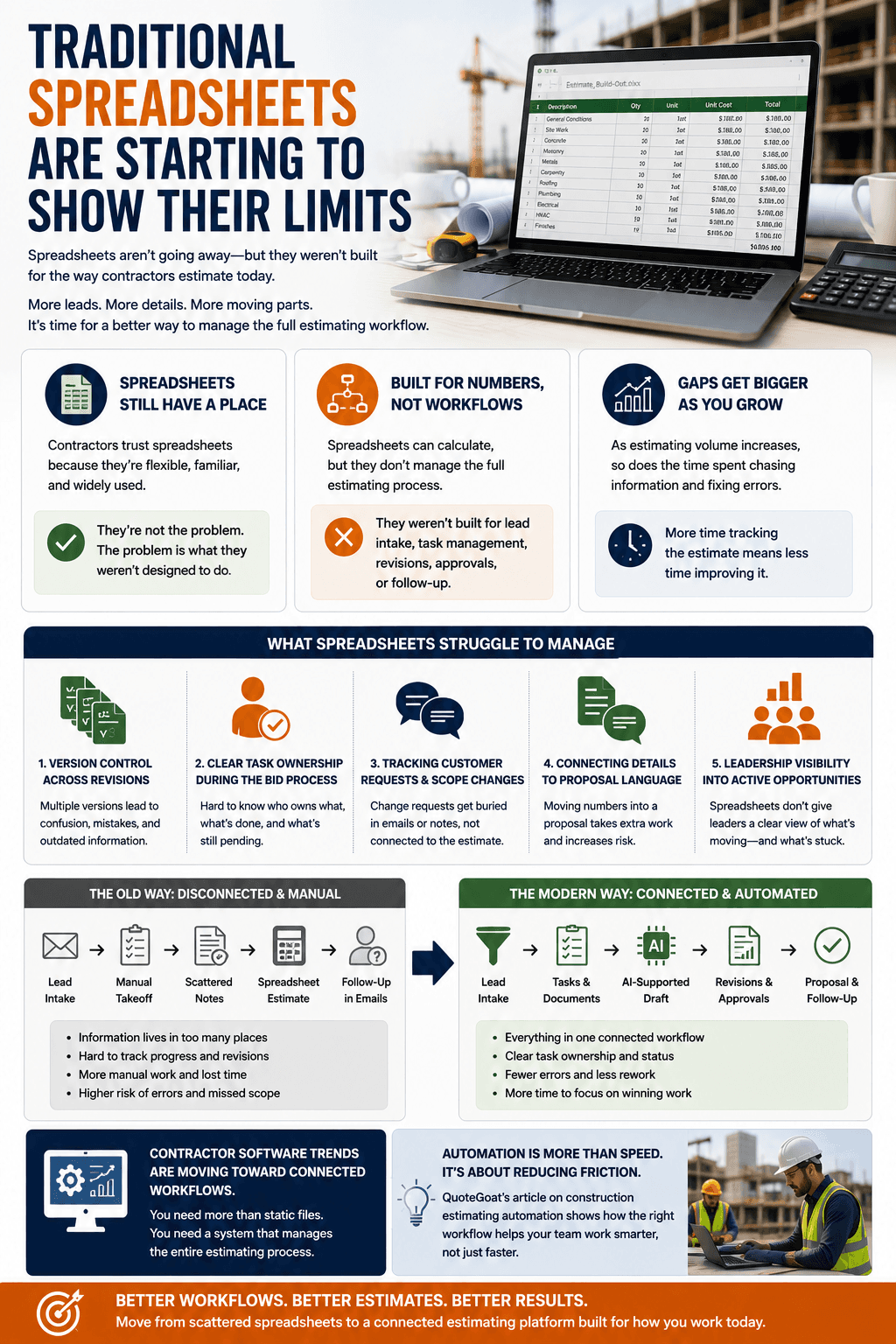
Spreadsheets are not going away. Contractors know them, trust them, and still use them for plenty of good reasons. The issue is not that spreadsheets are useless. The issue is that they were never designed to manage the full estimating workflow across lead intake, project notes, AI-supported draft creation, task assignment, revision tracking, proposal presentation, and follow-up.
A spreadsheet can hold numbers, but it does not always tell the story behind those numbers. It may not show who reviewed the scope, whether the latest supplier price was included, whether a subcontractor quote is still pending, or whether the customer requested a revision. As estimating volume grows, those gaps start to matter. The team spends more time tracking the estimate than improving it.
Contractor software trends are moving toward connected workflows because contractors need more than static files. They need estimating systems that help manage tasks, documents, assumptions, customer details, revisions, and bid status. That does not mean every contractor needs a bloated system. It means the estimating process needs a cleaner home than scattered files and memory.
Spreadsheets often struggle with:
- Version control across multiple estimate revisions.
- Clear task ownership during the bid process.
- Tracking customer requests and scope changes.
- Connecting estimate details to proposal language.
- Helping leadership see the status of active opportunities.
Accuracy Still Depends On Review, Data, And Process
Contractors are right to ask whether AI estimating is accurate. It is one of the most important questions in the conversation. The honest answer is that AI can improve speed and consistency, but accuracy still depends on the quality of the inputs, the workflow's structure, and the contractor's review. Bad information can still produce bad output. AI is not a magic shield against poor assumptions.
That does not make AI less useful. It means contractors need to use it with discipline. The best estimating workflows still include human review, cost validation, scope review, supplier pricing checks, subcontractor confirmation, and clear exclusions. AI can support the process, but it should not become the only layer of judgment.
A stronger process usually includes: Clear project information before the estimate begins. Updated labor, material, and subcontractor assumptions. Review of scope inclusions and exclusions. Final contractor approval before anything reaches the customer. A feedback loop that improves future estimates.
Residential Contractors Are Feeling The Shift Early
Residential construction is one area where AI estimating can be especially practical. Many residential contractors deal with high lead volume, quick customer expectations, repeated project types, and constant pressure to respond before a competitor does. A homeowner may be comparing multiple contractors at once, and the company that communicates clearly often has an advantage.
Residential estimating also involves a lot of repeatable structure. Kitchens, bathrooms, additions, roofing, exterior work, flooring, painting, concrete, and landscaping all have patterns that can be made easier to manage. The details still need professional review, but a cleaner workflow helps the team move faster from project intake to proposal.
For growing residential teams, the challenge is often consistency. One estimator may write proposals one way, another may format them differently, and a third may include different assumptions. AI-supported workflows can help standardize the process so the customer experience feels more polished. That consistency also helps newer team members ramp up without relying entirely on one senior estimator's memory.
Task Management Is Becoming Part Of Estimating
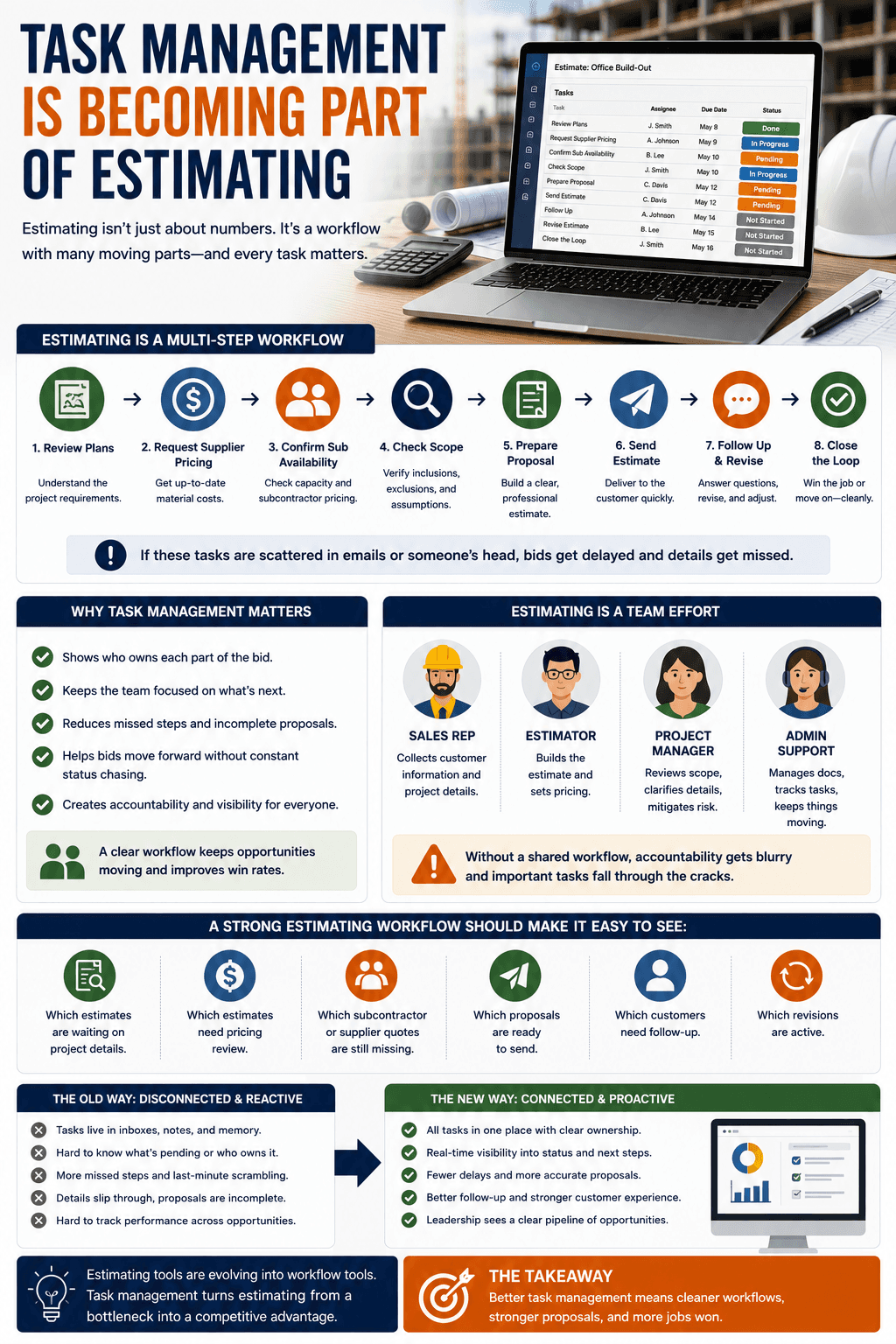
Estimating is not just a calculation. It is a workflow with moving parts. Someone needs to review plans, request supplier pricing, confirm subcontractor availability, check scope, prepare the proposal, send the estimate, follow up, revise, and close the loop. If those tasks live in someone's head or scattered messages, the process becomes fragile.
That is why task management is becoming increasingly important in software estimation. Contractors need to know who owns each part of the bid and what remains to be done before the estimate is ready. A missed task can delay the bid or create an incomplete proposal. A clear workflow helps the team keep opportunities moving without constant status chasing.
This is especially important for teams with multiple estimators, sales reps, project managers, or admin support. One person may collect customer information, another may prepare the estimate, and another may review the final proposal. Without a shared workflow, accountability gets blurry.
A stronger estimating workflow should make it easy to see:
- Which estimates are waiting on project details.
- Which estimates need pricing review.
- Which subcontractor or supplier quotes are still missing.
- Which proposals are ready to send.
- Which customers need follow-up.
- Which revisions are active.
AI Estimating Adoption Is About Better Control
The best reason to adopt AI estimating is not novelty. It is control. Contractors want a better handle on their estimating pipeline, bid speed, scope review, proposal quality, and team workload. They want to know which jobs are active, which bids are worth chasing, which estimates need attention, and where the process keeps slowing down.
AI estimating adoption is growing because contractors are tired of losing time to avoidable friction. They do not want to replace their team's expertise. They want that expertise spent on the decisions that actually need it. Software should handle the repetitive, messy administrative tasks so the contractor can focus on scope, risk, customer fit, pricing confidence, and winning better work.
This is also where an AI estimating platform can support a more professional customer experience. A clear estimate builds trust. A faster response keeps the customer engaged. A better proposal helps the contractor explain value rather than compete solely on price. In a market where customers have options, that experience matters.
Build A Faster, Cleaner Estimating Workflow With QuoteGoat
Contractors do not need more software noise. They need estimating tools that help them move faster, stay organized, and produce clearer proposals without losing control of the details. QuoteGoat is built for contractors who want AI-supported estimating that respects how real construction businesses operate.
If your current process relies on spreadsheets, scattered notes, repeated manual setup, and excessive follow-up, it may be time to tighten the workflow. QuoteGoat helps contractors build better estimating systems focused on speed, scope clarity, task visibility, and customer-ready proposals. Cleaner estimating is not about replacing your judgment. It is about giving your team a better way to use it.